Nomia Trail
Walking ancient paths across the Parnon Mountains
Experiencing the Trail
The Nomia Trail is a multi-day, self-guided hiking route across the Parnon mountain range in the eastern Peloponnese—considered one of the most unique and authentic sections of the Peloponnese trail network. The trail connects small mountain villages while moving through a rich and varied landscape of streams, fir forests, gorges, and high ridges, all the way to views over the Myrtoan Sea.
The route follows old footpaths that once linked these villages with seasonal grazing areas. Used for centuries by shepherds, farmers, and travelers, these paths form part of the historic backbone of the Peloponnese’s hiking network—today offering one of the best ways to experience the region on foot.
Arcadia has long been associated with pastoral stories and Greek mythology. According to local tradition, Nomia was a mountain nymph who lived among these slopes and forests. Walking the Nomia Trail today is not only a physical journey, but also a passage through myth, history, and living tradition.
Parnon (also known as Parnonas) is one of the most important ecological regions in Greece. The mountain hosts a remarkable variety of habitats—fir forests, chestnut groves, pine forests, alpine vegetation, and flowing streams. More than eighty rare plant species grow here, many of them unique to the region, and much of the area is protected within the Natura 2000 network. This makes the trail not only one of the most beautiful hikes in the Peloponnese, but also a meaningful, sustainable way to explore it.
The trail unfolds gradually, linking villages, forests, coastal views, and high mountain ridges—creating a rare sea-to-mountain experience that defines the best of the Peloponnese landscape. It reveals both the natural beauty and the cultural depth of the region, far from crowded routes.
The Nomia Trail is not only a crossing of a mountain range, but a slower way of traveling—immersed in local life, nature, and place. Walking from village to village allows travelers to understand how landscapes and communities are still connected.
Moments along the way—running water in a stream, the shade of fir trees, a quiet village square, or a meal shared with locals—are what make this journey truly memorable, and set it apart as one of the most authentic hiking experiences in the Peloponnese.
Villages Along the Trail
One of the most special aspects of the Nomia Trail is that the journey passes through living mountain villages, where life continues at its own pace.
Hikers usually stay in small guesthouses or homestays in villages such as:
• Kosmas
• Kastanitsa
• Platanos
• Agios Vasilios
Accommodation is often simple, but welcoming.
In the village taverns you can taste traditional Greek and Tsakonian dishes, often prepared with local ingredients. Kosmas and Kastanitsa are known for their chestnut products and chesnuts festivals, while Platanos celebrates its famous Cherry Festival each summer.
Part of the experience of the trail is simply spending time in these places — walking through narrow streets, sitting in the village square, and meeting the people who live here.
Experienced tour guide
Accommdating in traditional villages
Local Tavern
Transportation & gear carrier
Days Descreption
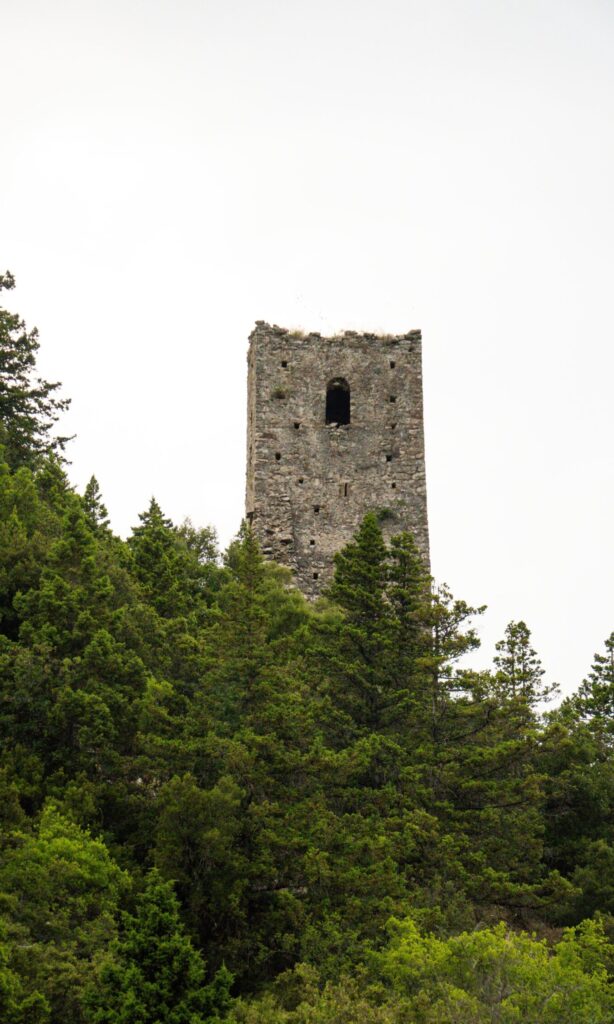
Kosmas → Agios Vasilios
The journey begins in the mountain village of Kosmas. From here the path follows old stone trails and small streams, gradually descending through wooded valleys. The tower of Glyppia appears in the distance as a reminder of the region’s long history. The day ends in the quiet village of Agios Vasilios.
Distance: 17k
Elevation Gain: 640m
Elevation Loss: 800m
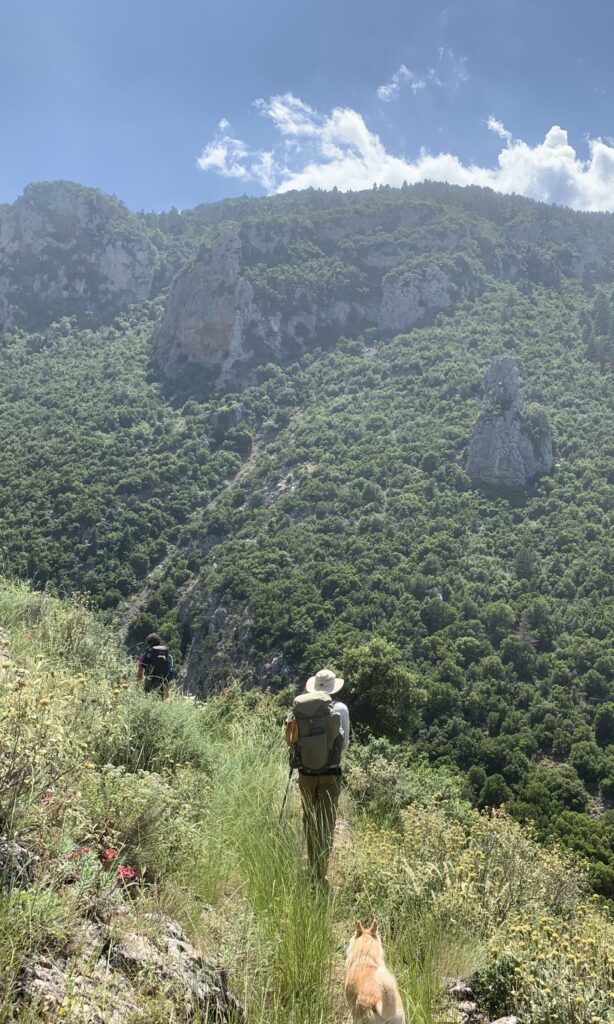
Agios Vasilios → Kastanitsa
The trail continues through tall fir forests before reaching the historic village of Prastos, once the capital of the Tsakonian community. From there the route passes the landscape of Mazia Gorge and climbs toward Kastanitsa, a remarkable stone village known for its traditional architecture and chestnut trees.
Distance: 17k
Elevation Gain: 1000m
Elevation Loss: 1000m

Kastanitsa → Platanos
This stage follows a gorge and the Platanos stream. The path moves through shaded sections of plane trees and small pools of water. In a few places hikers use installed ladders, iron steps, or ropes to pass rocky sections of the gorge. The village of Platanos appears among orchards and springs and offers a peaceful end to the day.
Distance: 14k
Elevation Gain: 600m
Elevation Loss: 1000m
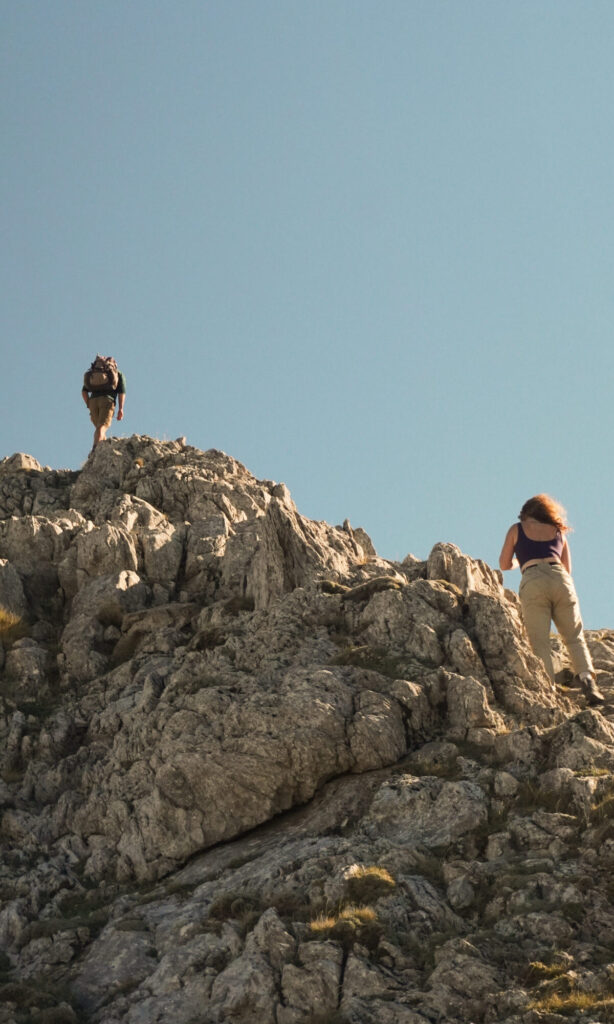
Platanos → Megali Tourla
The final stage climbs along an old shepherd’s road toward the higher slopes of the mountain. The trail reaches the village of Sitena before continuing upward through alpine terrain. The route finishes near the Monastery of Prophet Elias, with the option to continue to Megali Tourla (1934 m), the highest peak of Parnon.
From here the view stretches across the Peloponnese and toward the sea.
Distance: 14-20k
Elevation Gain: 1200-1500m
Elevation Loss: 200m
Planning Your Self-Guided Walk
For hikers planning a self-guided walking holiday in the Peloponnese, local professional support is available for organizing the practical aspects of the journey along the trail.
Optional services may include:
- Accommodation bookings along the route
- Transportation between villages and trailheads
- Luggage transfer between overnight stops
- Local guidance or updated trail information
- Support or evacuation assistance if needed
These services are entirely optional and can help make a self-guided hiking experience in the Parnon Mountains and Arcadia region smoother and more flexible.
For information or arrangements:
📞 +30 698 340 1973 (also via WhatsApp)
✉️ info@nomianomad.com
QUESTIONS?
Yes, hiking experience is recommended in order to do the Nomia Trail trek. While there is ways to adjust the trail and get support with equipment transfer and keep backpack loads light as possible, familiarity with hiking can enhance enjoyment. The daily distances of 13-17km is achievable with a reasonable level of fitness and comfort with hiking you will definitely have an unforgettable journey
Overnight stays along the Nomia Trail take place in small mountain villages along the route. Hikers stay in local guesthouses or homestays in villages such as Kosmas, Kastanitsa, and Platanos, where a few taverns also serve traditional Greek and Tsakonian food. Accommodation is simple and authentic, reflecting the rural character of the region, so booking in advance is recommended, especially during local festivals or busy travel periods.
Two seasons are especially beautiful on the Nomia Trail.
Spring (March – May)
Streams flow strongly after the winter rains, the mountains are green, and wildflowers begin to appear. Temperatures in the mountains remain cool and comfortable.
Autumn (September – November)
Chestnut and plane trees turn deep colors and the atmosphere becomes quieter again after the summer.
Weather is usually good during these seasons, though early spring and late autumn can occasionally bring rain.
Yes, but as the Nomia Trail follows ancient paths that have only recently been reopened and maintained. As more hikers begin to explore the route, the trail continues to develop and improve, so it is recommended to check for updated information before starting your hike.
Some sections of the trail pass through remote mountain areas where mobile network coverage is limited or not available. It is important to plan accordingly and make sure someone knows your route.
Public transportation can bring travelers to Leonidio or Sparta. From there, the final access to the mountain villages usually requires a short ride by local taxi.