
Personal Experience

28/01/2026

Taste, Listen, and Walk Through Tsakonian Tradition
A solo travellers guide by Elly Novick

Walking through the narrow high street in the centre of Leonidio, I was met by hanging tapestries dressed in beautiful colours and the smells of freshly baked pastries blowing through the wind. Along the roadside, large blue road signs greeted me with two lines of text: one in blue and the other in gold. One at the town’s entrance translates as: “Our language is Tsakonian. Ask people to speak it with you.”

Leonidio is the living heart of Tsakonian culture, where a distinct language, customs, architecture, and festivals thrive in this special coastal town. Through Nomia Experience, I met Eleni Manou, a teacher and author passionate about preserving Tsakonian life, who taught me about this ancient culture’s food, art and language.

“It’s our roots. We go forward. We’re not stuck. If you speak about tradition and you don’t do anything about it, it’s a dead thing. But tradition for me is a way of life. So it goes even in today’s life.” — Eleni Manou

Tsakonian: The Ancient Language of Greece

Tsakonian is the oldest living language in Greece with roots dating back over 2,400 years. The speakers are descendants of the iconic ancient Greek state, Sparta. This language has survived by being passed down by generations but it’s at risk of becoming forgotten. UNESCO has listed it as “severely endangered” due to it now only being spoken by a few thousand people – mostly whom are elders. In order for it to survive, it’s essential that it is taught through the community.


Eleni and the Tsakonian Archives group run weekly language classes at the Tsouchlou Mansion, a historic building nestled behind the main high street.

Tales in Tapestry: Colours of Tsakonian Life

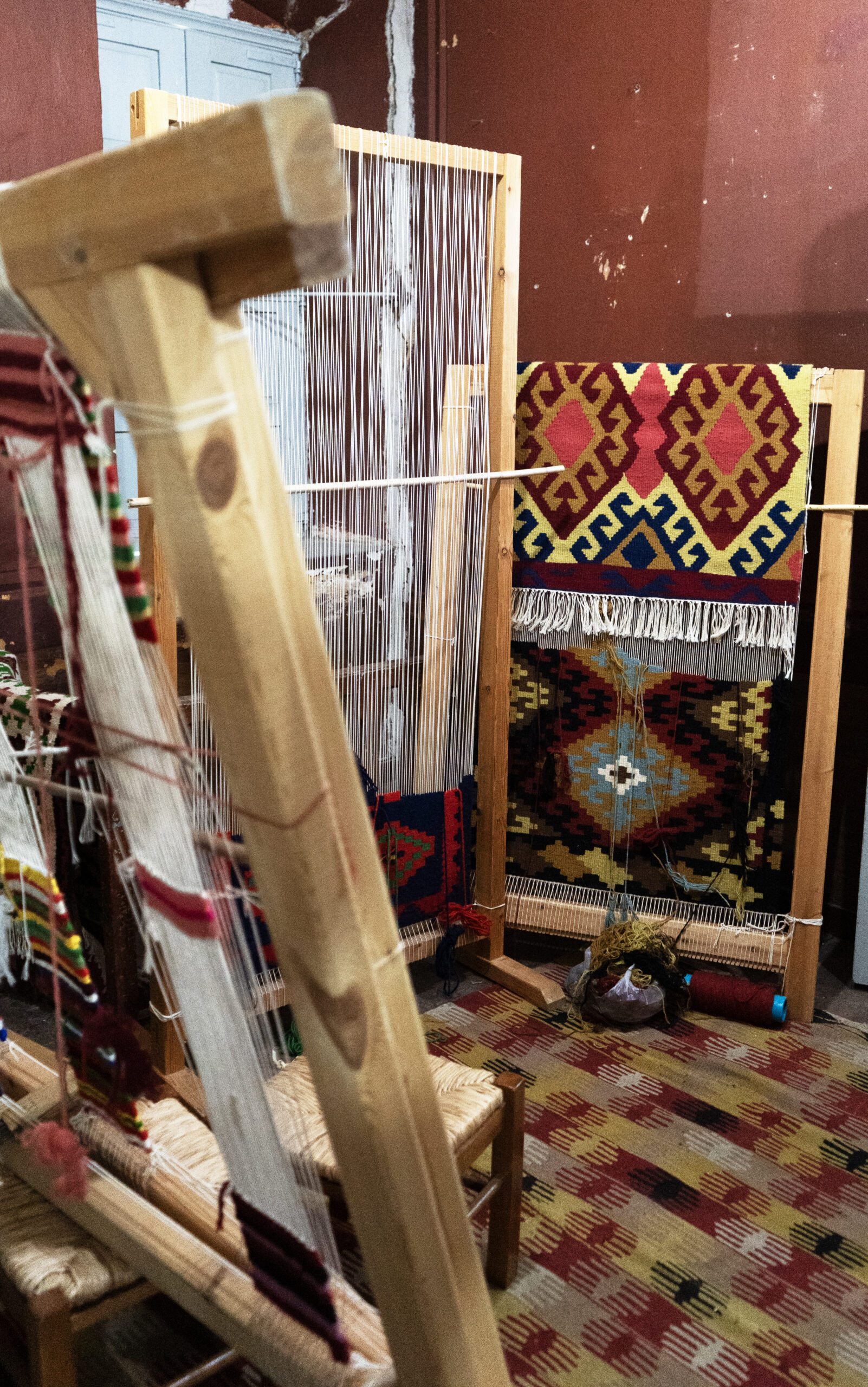
Sitting behind the classroom on the second floor of the Tsouchlou Mansion, is the Tsakonian weaving workshop. Walking through the classroom, past rows of desks and a large green chalkboard, you enter upon a doorway met with beautiful textiles hanging along the walls.


“It’s been a tradition for many years in Leonidio, my mum loved it, and she passed it down to me… Weaving is an art that many people love.” – weaving student, Thomae


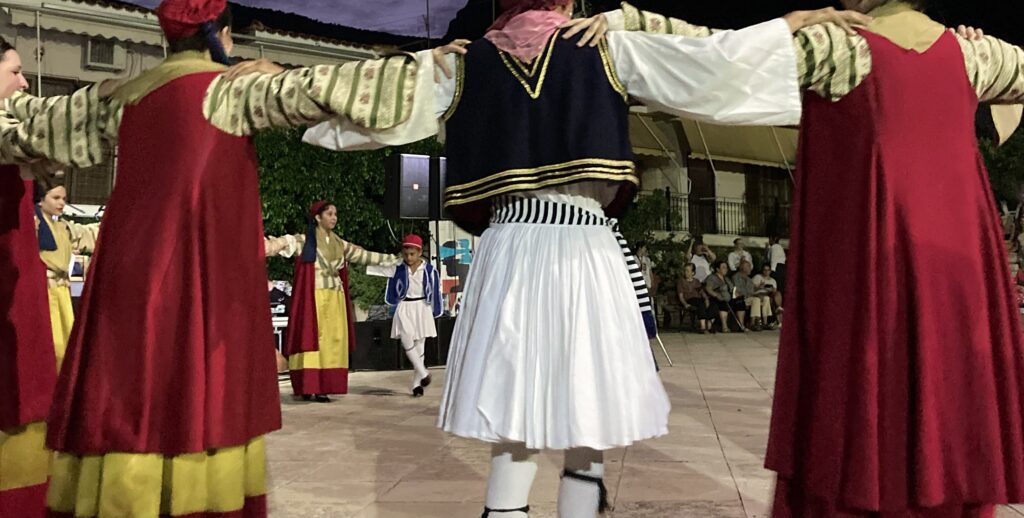
These tapestries feature strong geometry and vivid colour contrasts, carrying symbolic meanings tied to local life and beliefs. One design I loved is called cherakia which means ‘little hands’. Small, repeating, hand-shaped geometric figures are woven across the fabric. Many see it as individuals coming together, linked to the support of the community. In Tsakonian culture, this unity threads through art, dance, and language, making fufudia a poignant visual of its core philosophy.​

This is our identity…. It’s the ID card for Tsakonians.” says weaving teacher Metxia – whose name serendipitously translates as ‘silk lady.’

Tsakonian weaving
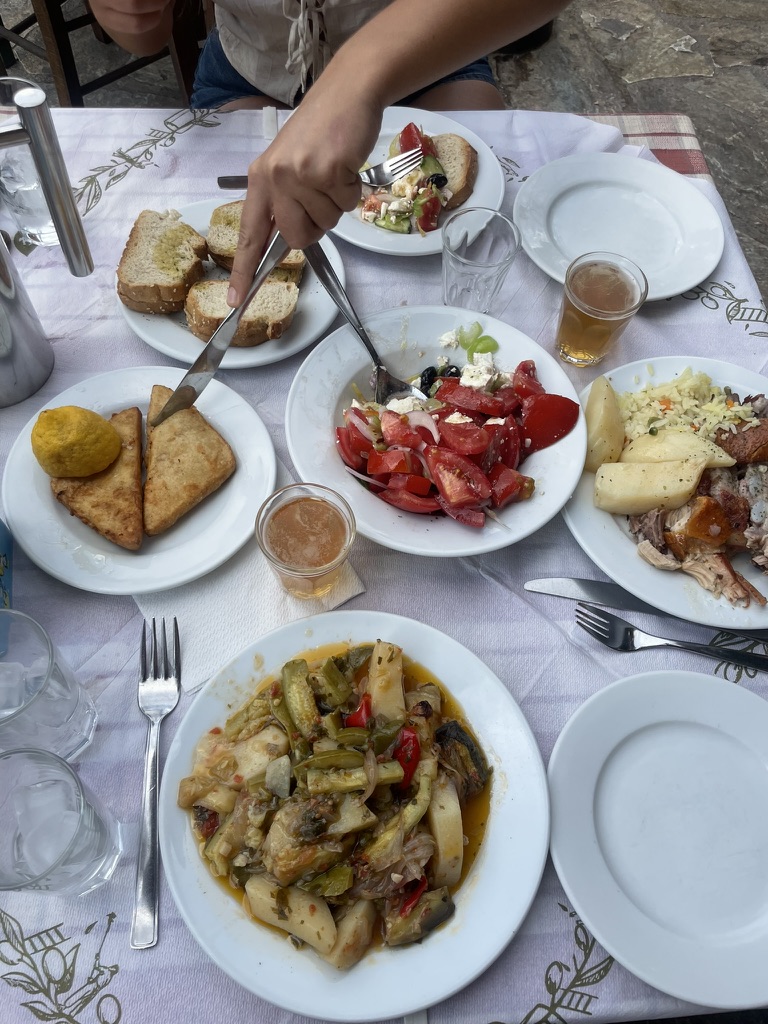
Local meal - Solo traveler blog

The Heart of the Community: Its Food

Tsakonian food embraces what the land produces. “It makes you feel that you have gained your freedom,” says Eleni Manou.​

What makes this cuisine special is its beautiful mixture of mountainous and coastal traditions. Chestnut and walnut trees crown the peaks, whilst olive groves line the riverbed in-between the canyons. Nestled in the heart of the Peloponnese, this ancient culture overflows with fresh, flavourful produce.​

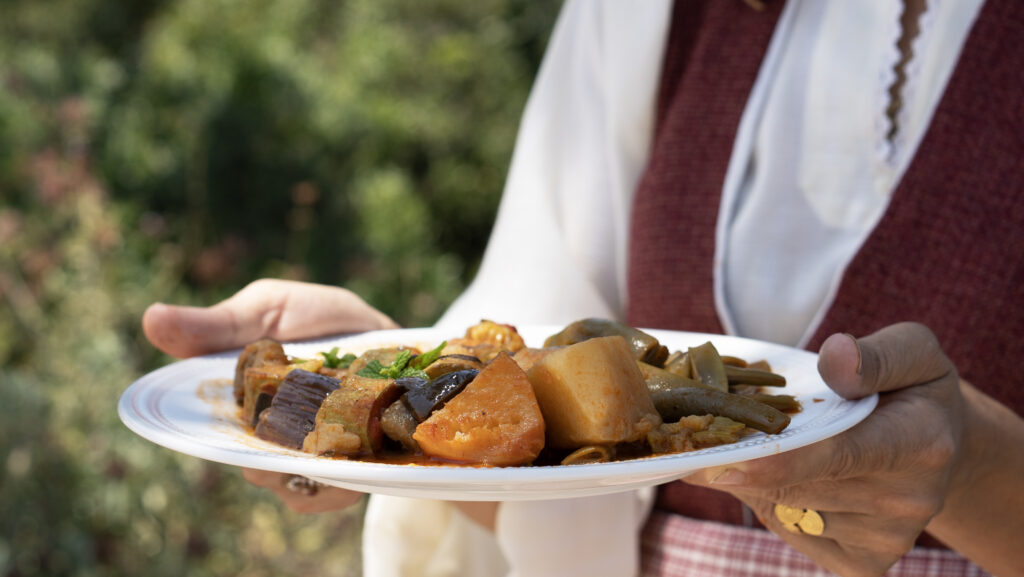
A symbolic icon is the Tsakonian eggplant. It is light purple with white stripes, unique to this region. It’s celebrated at the Melitzazz festival in Leonidio, blending jazz music with eggplant dishes.​

During my time in Leonidio, I had the pleasure to spend time cooking with Eleni and learning about traditional dishes. First was savori (τσάκωνικο σαβόρι), a one-pot feast of fresh vegetables starring the famous Tsakonian eggplant. Another was trachanas (τραχανάς), dried bulgur with sheep’s milk – one of the Eastern Mediterranean’s oldest comfort foods.

So, how can you eat it and get involved!?

One extraordinary experience I had was at Kokotas Restaurant in Vaskina, where I tried eggplant ice cream. Its fresh, natural sweetness connects you to the land. In my opinion, trying it is an absolute must!

Food powerfully shares intimate tales of a way of life and the land’s history. As Eleni says, “You make bonds when you give food. I put my energy now and it’s given to you. It’s an important thing.”
To book a cooking session and learn the stories behind each meal, click on the link Cooking Workshop.


Leonidio is home to an abundance of beautiful traditions preserved by the care and dedication of the community.


The Leonidio Women’s Agricultural Cooperative is a small group of local women dedicated to preserving traditional recipes while promoting local products. Their work focuses on Tsakonian specialties, particularly the PDO Tsakonian eggplant. The cooperative is a wonderful opportunity for visitors to connect with the community and even have the chance to purchase handmade local products to take home and enjoy!


With Nomia Experience, you can join activities that take you on a deep dive into Tsakonian culture, from cooking workshops to cultural tours, allowing you to be part of the story that keeps this ancient culture alive.


  • Enjoy all about local food, culture, community: link here
  • Walk the streets to experience immersive culture and history tours: link here

With every step, every flavor, and every shared story, you become part of Tsakonian culture and help to keep it alive.

Stay tuned for more of  Elly`s Solo Travelers Blog.